
The City Council is asking for views on how to make walking, wheeling, and cycling more accessible and easier for everyone throughout the city. They are proposing to draw up a Manchester Active Travel Strategy and Investment Plan and Manchester and Salford Ramblers are pleased to join the conversation. We have made a full response – please follow this link.
We fully endorse the aims of the Strategy - to make walking, wheeling, and cycling more accessible and easier for everyone throughout the city. There is considerable evidence to show that active travel, and walking in particular, have positive benefits which impact on the City Council’s wider policies for health, neighbourhood renewal and development, the environment and the climate emergency and it will be important that the strategy recognises this and provides a basis to influence those priorities and investment decisions.
The City Council also has responsibilities as a planning authority and the key aims and objectives of this Active Travel Strategy must be embedded in that Local Plan to ensure that all developments going forward promote active travel.
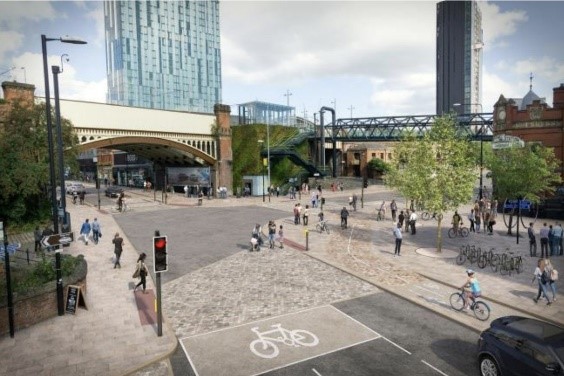
We argue that the provision of protected space for walkers, wheelers and cyclists and a more sustainable allocation of road space are all needed. Action is overdue on pavement parking and other obstructions and obstacles. We also believe that it is vital that there is regular maintenance of footpaths and rights of way to make them attractive and easier to use and this should be awarded a much higher priority than is currently the case. The strategy should help to strengthen the business case for such investments by underlining the rate of return achieved and the contribution made to other policy imperatives such as climate change and health inequalities.
We have also made specific comments on the proposed network of active travel routes, particularly in Wythenshawe, around the Mayfield development and in North Manchester. We have also argued that the network should link with other routes across and out of the city.

In short, we believe that:
- The strategy should recognise the importance of walking to health, neighbourhood renewal and development, the environment and the climate emergency and should make the case for investments from those budgets as well as highways and transport.
- Its aims and objectives should be embedded in the Local Plan so that all planning applications promote walking and active travel.
- Encouraging more leisure walking leads to more everyday walking – reducing the need for short car journeys, and regular walking has well documented health benefits.
- The strategy should recognise the importance of footpaths and rights of way.